
Seven Deadly Sins of Board Governance
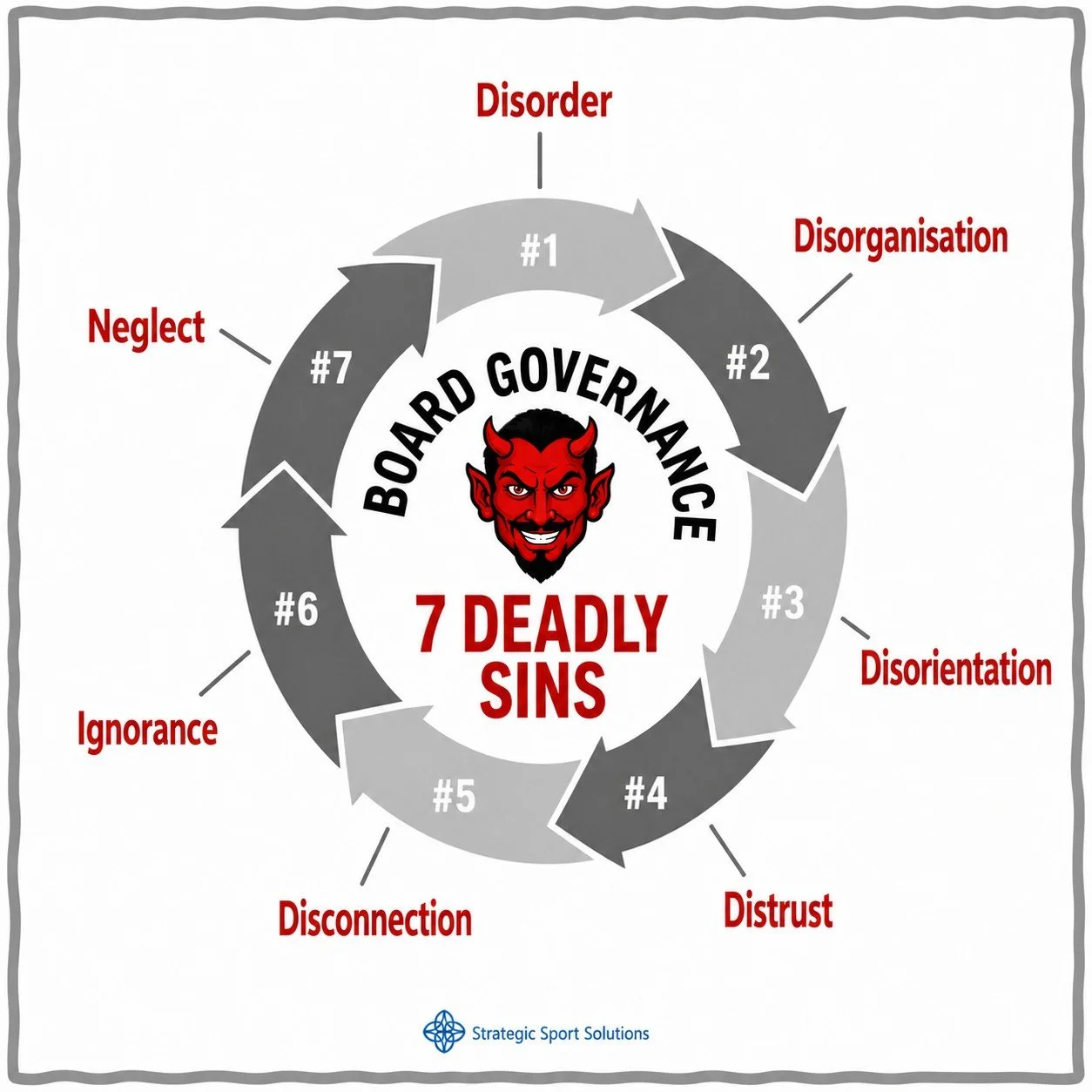
All Boards make mistakes. But some are deadlier than others!
Jak Carroll, Strategic Sport Solutions
Have you ever wondered why some sport and nonprofit Boards seem to work effectively while others continually struggle?
After observing Boards across the sport and not-for-profit sectors, I've noticed the same governance problems appear regularly.
I think of them as the 7 Deadly Sins of Board Governance.
Disorder: There is a failure to see the big picture, and the organisation does not have a clear strategy. People are busy enough, but the same problems keep arising. There is no sense of order to what is being done
Disorganisation: The Board is reactive, with operational rather than governance issues dominating meeting agendas. Reports to the Board have inconsistent formats and it is often not clear what is expected from the Board (ie, is a report for noting or is a decision required?). It is also difficult to access past policies, decisions and rules.
Disorientation: When new Board members are elected there is no formal orientation process involving relevant knowledge handover, role expectations, and other training. New members are expected to learn on the run and outdated meeting practices continue as no one knows any better.
Distrust: There is a lack of open discussion at Board meetings. Board members do not trust the reaction they will receive if they provide alternative views or if they show dissent. Board meetings are regarded as adversarial rather than a forum for making decisions that are best for the organisation.
Disconnection: Board members become so busy with meetings and committee work that they lose touch with the stakeholders of the organisation. Boards are accountable to grassroots members and need to be alert to their issues. They also have a role in maintaining positive connections with sponsors, donors, government agencies, and affiliates.
Ignorance: There is a lack of understanding of the operation of major programs of the organisation. Similarly with the financial situation. Some Board members do not have the financial literacy to understand basic financial documents and overlook indicators that highlight problems.
Neglect: Evaluation of programs or of the Board itself is rarely undertaken. There is little learning from past mistakes and little effort to improve existing programs or services to members. Tradition often trumps innovation.
Which of these deadly sins of board governance do you think is the most damaging to an organisation?